Monday, March 29, 2010

The Dean Mansion

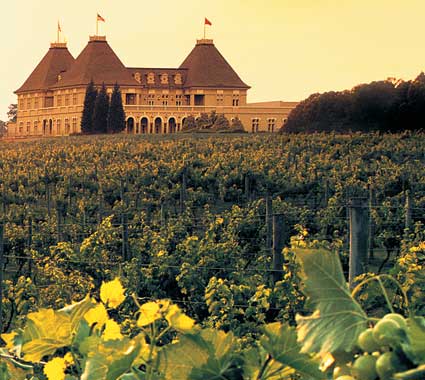
I like the idea of looking at massive, out-of-place buildings - so here's another!


This mansion is considered a wonder of the modern mansions around the world. While driving around on spring break, near my hometown of Norcross, GA, my family and I passed this monstrosity. To the left and right there are normal homes, maybe $400,000 a piece, where this home runs for $30,000,000! With the 60+ acres of land the house takes up 32,000 square feet. What happened to the rest of the land? There is a private 18-hole golf course in the back yard. This, I consider, to be out of place in the South, or at least compared to the surrounding ten+ miles of housing. If you have the money to live like a king, why not do it I suppose? Living in the European countryside in the suburbs of Atlanta, the best get away.



Sunday, March 28, 2010

Spring Break


Where is this place you may ask? Maybe somewhere in Europe? France? Even maybe California? No, this is a picture of Chateau Elan, which is in North Atlanta. I drove by this resort on my way back from Spring Break, and I found the idea of it quite interesting. Usually we think of places in the South trying to portray and even imitate the "Southern Image", but Chateau Elan is trying to imitate something you would find in the French Countryside. For this week's blog post, try to think of something you observed over spring break that refutes a Southern stereotype. If you can't think of anything from your spring break, try to think of another instance or find some fact online that goes against a stereotype we have discussed in class. I hope everyone had a great spring break and is ready to end the semester off on a good note!

Thursday, March 18, 2010

Slavery to Freedom? Agriculture to Modern Technology?

When I think about whether or not there was a transition from the Old South to the New South, the first thing that comes to my mind is slavery. How can someone say that there has not been a transition? Years ago in the South, slavery was the main topic of discussion between whites and blacks. You could go to any state in the south and find numerous white owners with african-american slaves. On the other hand, in the New South there are black people who are the boss' of white people and many other races. Race is not as much of an issue now that everyone is supposedly "equal."
The Old South has transitioned from agriculture to modern technology. Southerners have grown from growing crops and working in the fields, to now working as engineers and scientists. Yes, some southern states still have large open fields, but the majority of the South is now full of tall buildings full of technology. This proves that the stereotype that all southerners are country people working in fields and growing crops is mostly false.
Overall, I believe that their is a clear distinction between the Old South and the New South. Of course there will be some things that will never change but overall there has been a major change in southern history.

Wednesday, March 17, 2010

From picking cotton to picking people's brains: the transition of Southern economic focus

When Isabella asked us if there really was a difference between the "Old South" and the "New South", I started thinking. There are some aspects of both stereotypical views of the South that have not changed, but there are many that have. Race has been a big part of the transition from old to new, and equal rights are often perceived to be a part of the new, though I doubt this assumption at times. Race rights changes have seemed to be the identifier of any reincarnation of the South in history books, but the hate and inequalities still linger not just in the South, but in much of the United States. The racism is not as blatant as it was in the "Old South", but it still exists. In this way, I think there is not a difference between the "Old South" and the "New South", but let me describe a transition that I mark as an identifier of a change.
Growing up in North Carolina, much of my early education encompassed NC history. Teachers loved to tell stories about the Wright Brothers, Cape Hatteras, and the Lost Colony, but the more interesting stories looking back on those years were the lessons on NC's change in its participation in the US and world economy. In the times considered the "Old South", NC, like much of the South, based its economy on agriculture (specifically the production of cotton and tobacco). When the South lost the Civil War, these massive plantations that were the backbone of the southern economy were failing because of the lack of manpower due to white men that died in the war as well as the liquidation of free slave labor. The South was in shambles, but it had to rebuild. Today, the backbone of the economy in the "New South" has drastically changed because it has had to change. The Triangle (Raleigh, Durham, and Chapel Hill), is home to excellent intellectual environments including, but not limited to, Duke University, UNC-Chapel Hill, and NC State. In the center of the Triangle, huge contributors to the US and NC economy are based in Research Triangle Park, the largest research park in the US. RTP companies focus on high-tech research and development, and the area makes strides in innovation for the entire technology market. The entire Southern image has not completely changed because of terms like "Old South" and "New South", but in certain aspects of the southern culture in economy, there are drastic differences between old and new.

Tuesday, March 16, 2010

Throughout the scope of the class, we've discussed certain aspects of the Old South vs. the New South. When I walked into Dr.Hoefer's ENG1102 class and found out we were going to be studying the South for the entire semester, I wondered how that could ever be possible. Now I realize that one semester is certainly not enough. At the beginning, he emphasized the distinction between the two South's--plantations vs. skyscrapers, slavery vs. freedom. As the class progressed, each person began to develop his/her own opinion of the South. Are the stereotypes accurate, or are they complete fallacies? Most importantly, was there ever a transition from the Old South to the New South?
In my personal opinion, most of the negative Southern stereotypes are a little overrated--yes, people do drive pick-up trucks, and yes there are plantations; but there are Sedans, and buildings, and civilized people. Regarding the transition, I'm not too sure there ever was one... Up until we read Bastard out of Carolina, the transition seemed blatant. Before white trash was looked down upon, violence was prevalent, and discrimination was obvious. However, after reading this book, the so-called "New South" seems to have the same problems, though at a reduced scale. Perhaps the magnitude of the problem is still the same, but the attention and publicity it receives is kept at an optimal "low."

I was born in Cali, Colombia--South America. So technically speaking, I am from the South, just not from the American South. When I moved to Florida back in '99, my classmates mentioned how they had seen a truck with a Confederate flag as the drove to school. But it wasn't simply them mentioning something they had seen--their words seem to have some sort of scorn, disrespect maybe, and even mock. They then went on to say that these people were "Southerners," statement which confused me quite a bit. Confederate flag? What in the world is that? If I am from the South, how come I had no idea what that was? Hmm...interesting. As the conversation progressed, one of my classmates asked me if I knew what a 'redneck' was. Surely, my eyes gave away the confusion I was in! Redneck? Huh? Oh goodness, was I in for quite a ride! They explained to me that these are people who live in the South--the American South, they added for clarification. And these people did not like Hispanics. Say what? They don't like Hispanics? So I guess that means they don't like me, but they don't even know me?! That sounded awfully silly... As I got older, I didn't really have much contact with Southern culture, much less with Southerners. A country accent is mocked and ridiculed in South Florida, and country music--God forbid someone ever hears you listening to that. Then I decided to come to Tech... well, dang, Tech is in Georgia... and Georgia, that's as Southern as you can get! I guess what I'm trying to say is that when I came here a couple months there was a certain fear that people weren't going to accept me because of where I was born. Southern hospitality was something I was extremely unfamiliar with, as well as Southern home cooking. Ironically enough, the first friend (and I mean friend, not acquaintance) I made here was born in Birmingham, Alabama-- I would dare say that's pretty Southern. She is one of the sweetest people I know--welcoming, loving, accepting. She didn't stereotype me by my nationality, she actually got to know me! All in all, the ideas I had of the South were all pretty flawed, and I'm ever so glad that's the case!

Wednesday, March 10, 2010

My Personal Experience

Living in the South for the eight months that I have been here has definitely supported my vision of what I thought the South was like. I have been living in Baltimore for the 18 years that I have been living so I have experienced the complete opposite of the everyday lifestyle of a southerner. Back at home, the majority of the people have attitudes and are always rude. When you go to a fast food restaurant in Baltimore, the workers do not have any manners and act as if people are forcing them to work there. However, when I came to Atlanta, it was a complete change. Everyone here has manners and have such pleasant attitudes. I must admit that I have always expected anyone from the South to have the classic southern accent that you hear in the movies. Of course not everyone has the deep southern accent, but the majority of the Georgians that I have met at Georgia Tech have the sweet, country-style, ol' southern accent that I absolutely love. The only thing that the south has proven me wrong about is the amount of open land and cornfields that I expected them to have. Since I have been in Atlanta, I have yet to see any cornfields or huge, open land. The closest thing to the stereotypical "cornfields" I expected the south to have, is the woods that my friends and I cleaned up for community service (see picture). The area that we cleaned up was a large, open space of wildlife. However, we drove a few miles to get to it because the majority of Atlanta's land is taken by buildings, schools, etc. Overall, the South has definitely impressed me and have met all of my expectations of what it's like to be in the south.

Tuesday, March 9, 2010

From the Heart

We've been discussing how people, movies, restaurants, and whatever else we can think if, influences the South. But what do WE think about the South, on our own terms, in our own words? In things you've seen, things you've heard, things you've done, how has living in the South changed your view or backed up your previous opinions of the South?
Having lived in Georgia my whole life, I know it very well. In one of my two neighborhoods I have lived in throughout my life I can distinctly remember knowing at the LEAST, neighbors for twelve houses in each direction. There were obviously more spread out in each direction, but within my reign of movement at age 6, for example, twelve was a lot. At those houses I had friends, most of which I still know today, any one of the kids in our "group" could walk in the garage door (most of the time we didn't even know where the front door and doorbell were) and say hi to the family without knocking. Though I have visited many people in many different states and regions of our country, the South is without a doubt the most hospitable place I have ever seen. The freedoms we enjoy here are not found anywhere else; I love my home in the South.

Monday, March 8, 2010

The Waterboy

Adam Sandler plays a young man from a Louisiana bayou who has a mental disorder, though not too serious. Everyone in this movie captures the southern "accent." When they speak, the draw out their vowels, often making very peculiar shapes and expressions with their faces and mouths. Also, in this video clip, at the "southern cookout" the animals run wild in the yard, the family eats outside, and young Bobby Boucher falls at his mama's feet over anyone else. Most towns can jokingly say that they have a "village idiot," but in this movie, in this town, that title applies to half the population. Oh, and everyone centers their daily lives around football.

It is no wonder to me why people who do not live in the south have these wild and outrageous stereotypes running through their heads when someone mentions the South. Before my cousins moved down here from Chicago they sent me e-mails and text messaged me battering me with questions about what clothes they needed to buy, or if they needed to get used to new food; keep in mind this was when we were in about eighth grade. Even at that age, I knew they were being ridiculous. There is no difference in clothing, except we wear shorts more often to accommodate the climate. The food is the same, with a few added recipes or ingredients. We are not different becuase we live in the South, people need to learn not to believe everything they see on the big screen.


Wednesday, March 3, 2010

Run Forrest Run!


The first thing that comes to my mind when thinking about a movie that portrays what it is like to live in the South is Forrest Gump. Forrest Gump is about a young man from Alabama who tells the story about his life and how he meets a girl named Jenny who is there for him through thick and thin. The movie takes place in Savannah, Georgia and every character in the movie has the typical southern accent that you would expec
t to hear from someone born and raised in the South. Many of the characters also portray the "poor white trash" stereotype such as the bus driver in the clip posted below. All throughout the movie, the audience will notice that in all of scenes there are old country style houses and cornfields everywhere. Forrest and Jenny spend many of their days playing in the cornfields and climbing trees. The soundtrack of Forrest Gump also represented the South well. Of course, Sweet Home Alabama was chosen as one of the main soundtracks because it represented the country-style music that many southerners typically listen to.
Click on picture to see video.
If video does not work, click here.

The Dukes of Hazzard

One movie that really stands out to me as portraying the South in the typical Redneck stereotype is "The Dukes of Hazzard". The two main characters Bo and Luke help with their uncle's moonshine business while running from cops in their car named "General Lee". After Bo and Luke are evicted from their farm, they participate in the annual Hazzard Road Race Rally to try to get their farm back.
The rough synopsis itself is enough to establish a hillbilly stereotype usually associated with the South. The characters' accents, speech and all-around lifestyles are typical assumptions outsiders make of people from the South, and the movie helps fortify these stereotypes in some peoples' minds. Not all southerners (in fact very few southerners) live or act like this movie on an everyday basis. I personally don't know anyone who drives a souped-up racing car with "Dixie Land" as its horn, but as these stereotypes continue to be portrayed in movies, people will keep believing they could be true.

Tuesday, March 2, 2010

But I saw it in a movie...


When talking to people not from the South, you sometimes run across certain ones who always ask about common stereotypes in the South. For example, when traveling out of state I have had many different people, upon hearing where I am from, ask me if I hunted, or if I rode ATVs a lot. Most are shocked when they find out that not only do I not do most of these things, but that I also don’t drive a jacked up truck. After this happening many times I began to think, “What would cause them to believe this is how southerners live?” and came to the conclusion that one of the biggest things that affect how others view people from the south is how we are portrayed in movies. People who haven’t had the opportunity to visit the South often only have the media and movies to show them “what southerners are.”
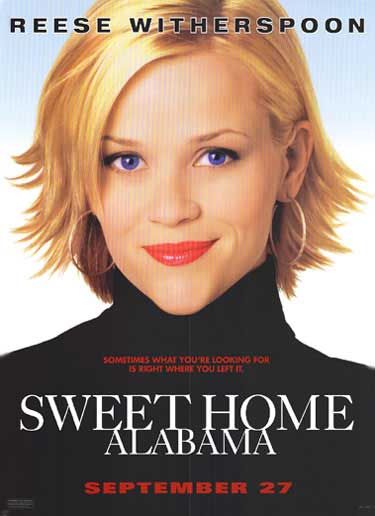
So for this blog topic, find one movie that you feel would cause people from other parts of the country to view the people of the south as the rednecks most movies make southerners out to be. One that stands out blatantly to me is the movie Sweet Home Alabama. This movie contains so many stereotypes and portrays almost all the men from the South as extreme rednecks and southerners in general as idiots.